Saltar al contenido

Blue tiger eye — sometimes called hawk’s eye — is one of the most beautiful and quietly powerful variations of tiger eye.
Worn as a bracelet, it blends deep blue chatoyancy with the protective, grounding properties shoppers expect from tiger eye.
This guide explains blue tiger eye bracelet meaning, the protection benefits, Feng Shui uses, how it compares to hawk’s eye, price expectations, authenticity checks, styling tips, and care.
It’s written for U.S. readers in plain, professional language and includes helpful internal links to related resources and products on your site.
TL;DR - Key Takeaways
If you're short on time, here's what you need to know about Blue Tiger Eye bracelets:
Meaning & Benefits
Symbolizes calm clarity, communication, and protective insight. Believed to reduce anxiety and enhance situational awareness in metaphysical practice.
Feng Shui Use
Place in North (Career) or Northeast (Knowledge) areas. Wear on dominant wrist for action, non-dominant for receptive energy.
Price & Value
Prices range from $10-$400+ based on bead size, chatoyancy quality, and natural vs. treated stones.
Authenticity Check
Look for moving "cat's eye" effect, natural color variations, cool temperature, and buy from reputable sellers.
Table of Contents
Quick takeaways
-
Meaning: Blue tiger eye is associated with calm clarity, focus, and protection, especially for communication and intuition.
-
Perceived Benefits (in metaphysical practice): Believed to shield against negative energy, promote calm to reduce anxiety, and enhance situational awareness.
-
Feng Shui use: Best placed in areas related to career and knowledge (North, Northeast) or worn to balance throat- and third-eye energy.
-
Price range: Depends on bead size, polish, and whether the stone is dyed — expect a broad range from budget to premium.
-
Buy tips: Look for natural chatoyancy (cat-eye effect), even color, and reputable sellers; compare against known guides like our pillar article on tiger eye. (See link below.)
What is Blue Tiger Eye?
Blue tiger eye is a variety of the quartz family known for its silky luster and a striking optical effect called chatoyancy — the cat-eye reflection that seems to move as the light changes.
Chemically it's very similar to standard golden brown tiger eye but displays blue-gray tones because of microscopic fibrous inclusions and, in some cases, partial pseudomorphism (where crocidolite fibers are replaced by silica).
When cut and polished as beads for a bracelet, the stone shows a silk-like band that makes the surface come alive.
Blue Tiger Eye Bracelet Meaning — symbolism and modern use
Culturally and spiritually, tiger eye varieties have been valued for protection and personal power for centuries.
The blue tiger eye bracelet meaning emphasizes calm mental clarity, improved communication, and balanced intuition.
-
Calm clarity & focus: Blue tones are traditionally linked to the throat chakra and mental clarity. Wearing a blue tiger eye bracelet can help steady racing thoughts and support clear expression.
-
Protection with insight: Like classic tiger eye, the blue variety is protective, but its cooler hue places emphasis on perceptive protection — helping you "see" social or emotional undercurrents and stay centered.
-
Emotional balance: Users report feeling less reactive and more reflective when wearing blue tiger eye, which makes it a popular choice for stressful work environments or during public speaking.
This meaning complements the broader concepts discussed in our pillar article, Tiger Eye Bracelet Guide: Meaning, Benefits & How to Wear It, which explores tiger eye's general properties and wearing practices.
For a deeper view of how tiger eye fits into a full gem and feng shui regimen, see our main guide.
Protection benefits: how and why it works
In crystal healing and spiritual traditions, the protective qualities attributed to blue tiger eye stem from both symbolic meaning and its use as a tactile focus object.
Many wearers report experiences such as:
-
Energetic shield: The stone is thought to form a subtle energetic barrier that deflects negativity and emotional turmoil. This is especially useful for people who notice they "absorb" stress from busy environments.
-
Situational awareness: Blue tiger eye sharpens observational skills. Wearers often describe feeling more alert to social cues or potential risks — an advantage in negotiating, travel, or crowded settings.
-
Stress reduction: Its calming color and steady chatoyancy create a tactile focus point. Touching or observing the bead movement can be grounding and reduce acute anxiety.
-
Support for communication: Because of its connection to the throat chakra, it supports honest, calm expression and may protect against misunderstandings or speech-related anxieties.
Remember: these benefits are primarily experiential and rooted in traditional gemstone and metaphysical practice.
Many users combine the bracelet with mindfulness practices or Feng Shui adjustments to amplify effects.
Blue tiger eye vs. hawk's eye — are they the same?
The terms "blue tiger eye" and hawk's eye are frequently used interchangeably.
Both names describe similar blue to bluish-gray chatoyant stones derived from the same family.
Historically, "hawk's eye" has been used to describe darker bluish varieties, while "blue tiger eye" is a modern marketing-friendly term.
Differences in practice:
-
Naming: "Hawk's eye" appears more in mineralogical contexts; "blue tiger eye" is common in jewelry retail.
-
Appearance: Hawk's eye can be deeper, almost slate-blue; blue tiger eye sometimes shows lighter blue-gray tones.
-
Value: Both follow the same valuation principles: stronger, well-defined chatoyancy and stable, natural color command higher prices.
If you're comparing products, look at the bead photos and chatoyancy rather than only the name. Our article on how to identify real vs. fake tiger eye offers practical tests you can use during purchase.
Feng Shui: where and how to use a blue tiger eye bracelet
In Feng Shui, color and direction matter. Blue tiger eye brings both protective energy and calm clarity — making it versatile in home and personal Feng Shui.
Best placements in the home:
-
North (Career): Blue ties to water energy; placing a blue tiger eye bracelet or stone in the North area can support career clarity and opportunities.
-
Northeast (Knowledge & Wisdom): Keep it in the Northeast to strengthen study, intuition, and learning.
-
Personal altar or desk: A bracelet on a small stand near your workspace helps with focus and communication.
Wearing it as a personal Feng Shui tool:
-
Daily wear: Wear on the dominant wrist for more active protection and outward expression.
-
Left wrist: For energetic reception and inner work (feminine/receiving energy in some practices).
-
Right wrist: For projection and action — wearing on the right can help you act with confident clarity.

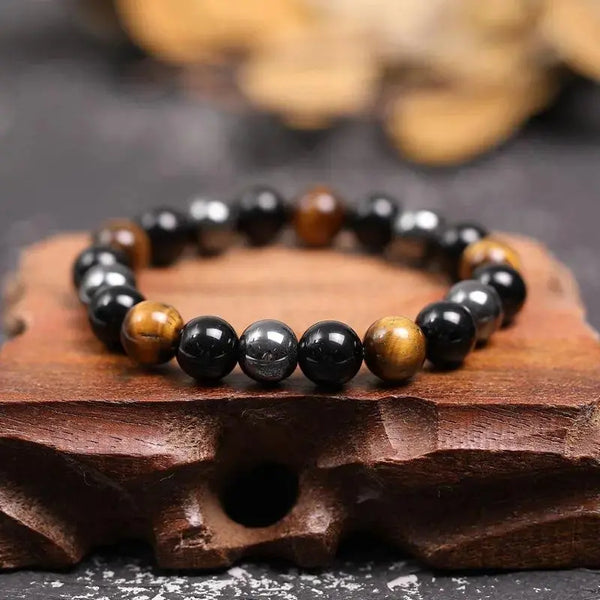
If you're interested in viewing a range of tiger eye bracelets to compare craftsmanship and style—from simple beads to more elaborate designs—our curated collection can serve as a helpful visual reference.
Buying guide: price, bead sizes, and what affects value
blue tiger eye bracelet price varies widely. Key pricing factors include bead diameter, bead quality (chatoyancy), polish, and whether the stone is natural or enhanced.
Typical price bands (U.S. retail):
-
Budget ($10–$25): Small beads (4–6mm), mass-produced, possibly heat-treated or dyed. Good for fashion but beware of poor chatoyancy.
-
Mid-range ($25–$100): 6–10mm beads with visible chatoyancy, better polish, often from reliable suppliers. Great balance of beauty and value.
-
Premium ($100–$400+): Larger beads (10–12mm+), strong silky chatoyancy, uniform natural color, and well-crafted clasps or bracelets. Collectible-quality beads or designer settings push the price higher.
Bead sizes explained:
-
4–6mm: Subtle and delicate; good for stacking or women's styles.
-
8mm: The most common and versatile size; comfortable for most wrists.
-
10–12mm: Bold, statement look; shows chatoyancy best in a single bead.
Natural vs. treated:
-
Natural blue tiger eye shows natural chatoyancy without signs of uniform dye or surface coating.
-
Treated or dyed pieces may have artificially enhanced color; they can look striking but may be less valuable and can fade over time.

To see how these factors (size, chatoyancy, finish) come together in finished pieces, you can explore various examples in our tiger eye bracelet collection.
Authenticity tests: how to spot real blue tiger eye
Spotting real blue tiger eye bracelet beads requires observation and a few simple checks:
-
Chatoyancy (cat-eye) test: Under direct light, you should see a moving band of light across the bead's surface. If the band is flat or the stone looks painted, be cautious.
-
Magnification inspection: With a loupe (10x), natural stones show fibrous structure and subtle inclusions; glass or plastic will be smooth or have bubbles.
-
Temperature test: Natural stone feels cool to the touch and warms slowly. Plastic warms quickly.
-
Scratch test — don't do this on prized jewelry: Quartz-based tiger eye is relatively hard (Mohs 6–7). It will resist scratching better than glass or soft imitations. (Avoid damaging a piece you might want to return.)
-
Price & provenance check: If the price is too good to be true for large, highly chatoyant beads, verify seller reputation and return policy.
For step-by-step authentication advice, see our authentication guide referenced above.
Styling and wearing tips (men and women)
The blue tiger eye stone bracelet is highly versatile and pairs well with modern and traditional wardrobes.
Women:
-
Layering: Pair an 8mm blue tiger eye bracelet with thin gold bangles or leather wraps for texture.
-
Office: A single 6–8mm bead bracelet worn with a watch conveys understated confidence.
-
Evening: Larger beads (10–12mm) with a polished finish make a statement against darker fabrics.
Men:
-
Casual: 8–10mm blue tiger eye beads stacked with matte lava or hematite beads give a masculine, balanced look.
-
Smart-casual: Match bead tone with a navy blazer or denim shirt to harmonize the blue hues.
-
Professional: Choose low-shine or matte finishes in medium-sized beads to keep accessories subtle and professional.
Unisex tips:
-
Mix with metal: Silver and stainless steel pair beautifully with blue tones. Gold works too, especially when the blue leans toward teal.
-
Proportion: Match bead size to wrist size — smaller wrists generally suit 6–8mm; larger wrists look better with 8–12mm.
Care, cleaning, and recharging your bracelet
Daily care: Remove before showering, swimming, or exercising to avoid exposure to chemicals and sweat. Blue tiger eye is relatively durable but can still chip if knocked.
Cleaning: Wipe with a soft, damp cloth. For a deeper clean, use mild soap and warm water, then dry thoroughly. Avoid ultrasonic cleaners — they may damage stringing material or certain finishes.
Recharging & energetic clearing: If you use your bracelet for metaphysical work:
-
Moonlight: Place under the full moon for a gentle recharge.
-
Selenite plate: Place beads on a selenite slab to clear and charge.
-
Visualization: Hold the bracelet, breathe deeply, and visualize a blue light cleansing and recharging the stone.
FAQ (short, optimized for SERP snippets)
Q: What does a blue tiger eye bracelet mean?
A: It symbolizes calm clarity, improved communication, and protective insight. Blue tiger eye supports emotional balance and situational awareness.
Q: Is blue tiger eye the same as hawk's eye?
A: The terms are often used interchangeably. Hawk's eye often describes darker bluish varieties; blue tiger eye is a retail-friendly name for similar stones.
Q: How much does a blue tiger eye bracelet cost?
A: Prices range widely. Expect budget options from about $15–$40, mid-range $40–$120, and premium pieces $120+. Factors include bead size, quality, and whether the stone is treated.
Q: How do I know if my blue tiger eye bracelet is real?
A: Look for strong chatoyancy, natural inclusions under magnification, cool temperature to the touch, and buy from reputable sellers with good return policies. See our authentication guide for more tests.
Q: How should I wear a blue tiger eye bracelet for protection?
A: Wear it daily on the wrist that feels most natural for your intention (dominant for action, non-dominant for receiving). In Feng Shui, pairing it with North or Northeast placements in your space can amplify career or wisdom energy.
Closing thoughts
A blue tiger eye bracelet is an elegant, functional piece of jewelry that blends protective properties with soothing, communicative energy.
Whether you're buying your first piece or adding to a collection, focus on natural chatoyancy, honest vendor descriptions, and bead size that matches your style.
For more on tiger eye's broader meanings and how to combine bracelets with other Feng Shui or crystal practices, check our main guide and browse curated products in the collection.
-
Pillar guide (more on meaning & how to wear): https://karmarenewal.com/blogs/tiger-eye-bracelet/tiger-eye-bracelet-guide
-
Shop curated tiger eye bracelets: https://karmarenewal.com/collections/tiger-eye-bracelet