Skip to content

The first time I held a high-grade Tiger Eye bracelet under direct sunlight — this was maybe six years ago, at a gem show in Tucson — I finally understood why this stone has outlasted every trend cycle.
That narrow beam of golden light moving across the beads isn't something a camera ever fully captures.
And despite its beauty, Tiger Eye is still one of the more affordable natural gemstones used in jewelry today.
So how much is a Tiger Eye bracelet actually worth in 2026? I've been sourcing and selling them at Karma & Renewal ever since that Tucson show.
Here's what I've learned about pricing, quality, and how to avoid overpaying for a stone that should never feel out of reach.
Quick Answer: Most real Tiger Eye bracelets cost between $15 and $60 for everyday quality pieces, while premium handmade bracelets with strong chatoyancy and larger beads can exceed $120+.
The biggest factors affecting value:
- Natural chatoyancy ("cat-eye" shimmer)
- Bead size and stone quality
- Whether the stone is dyed or genuine
- Handmade craftsmanship
- Metal materials and overall finish
If you're shopping right now and just need a price range, the tables below break it down by type, bead size, and where you buy.

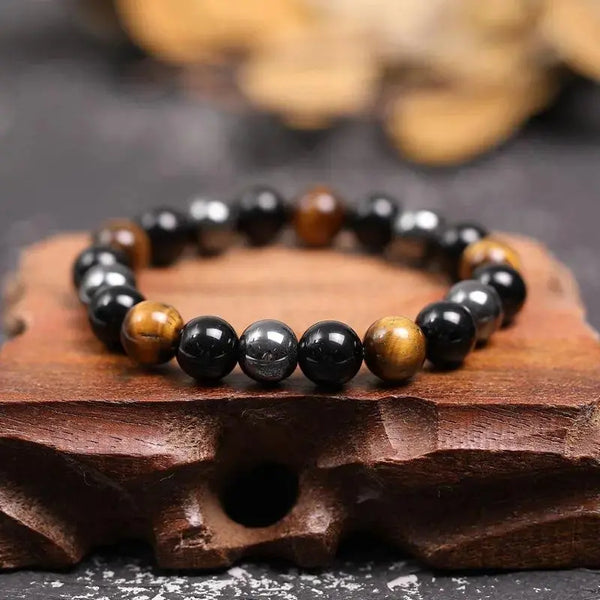
Natural Tiger Eye bracelets with rich golden-brown shimmer — the chatoyancy you see here is what separates quality stone from flat imitations.
Each piece hand-selected for authentic chatoyancy. 30-day satisfaction guarantee.
What Is Tiger Eye?
Tiger Eye is a variety of quartz formed through a rare geological process called pseudomorphosis — where quartz gradually replaces crocidolite fibers, preserving the original fibrous structure.
This is what creates chatoyancy: the silky, moving reflection that makes the stone unmistakable.
Most Tiger Eye displays warm golden-brown tones, though blue (Hawk's Eye) and red varieties also exist and tend to be rarer.
The majority of commercial Tiger Eye today comes from South Africa and Western Australia.
For centuries, people have worn Tiger Eye jewelry as a symbol of protection, grounding, confidence, and focus. But does its spiritual reputation affect what you'll pay? We'll get to that.
How Much Is a Tiger Eye Bracelet Worth?
Pricing varies more than most buyers expect. A low-cost bracelet sold online for $8 may use dyed stone or weak-quality beads, while a handcrafted bracelet using natural high-grade Tiger Eye can easily cost 5–10 times more.
| Type | Typical Price | What You Usually Get |
|---|---|---|
| Basic Stretch Bracelet | $15 – $30 | 6mm–8mm beads, everyday quality |
| Premium Natural Bracelet | $40 – $80 | Stronger shimmer and better polish |
| Handmade Luxury Pieces | $80 – $200+ | Larger beads, silver/gold accents, premium craftsmanship |
| Blue or Red Tiger Eye | $35 – $120+ | Rare or heat-treated varieties |
Tiger Eye Bracelet Price by Bead Size
Bead size significantly impacts both price and wrist presence.
As a quick visual reference:
6mm looks delicate and minimal — a subtle everyday piece.
8mm is the Goldilocks size that works on nearly every wrist. 10mm starts to feel substantial and masculine.
12mm+ is unmistakably bold — the kind of bracelet people notice from across a room.
| Bead Size | Typical Price Range | Most Common Buyer |
|---|---|---|
| 6mm | $15 – $25 | Minimal everyday wear |
| 8mm | $20 – $40 | Most popular unisex size |
| 10mm | $35 – $60 | Bold men's bracelet styles |
| 12mm+ | $60 – $120+ | Collectors and statement jewelry |
What our customers say about Tiger Eye value:
"I bought a $12 Tiger Eye bracelet on Amazon and it arrived looking nothing like the photo — flat, dull, almost no shimmer. Returned it and ordered from Karma & Renewal instead. The difference in chatoyancy was night and day. Definitely worth the extra $25."
— Mark D., verified buyer
"Was skeptical about spending $60+ on a bracelet. Six months later, I wear it almost daily and the polish still looks new. Turns out quality materials actually last."
— Sarah K., verified buyer
Where to Buy: Price Comparison by Channel
Where you shop matters as much as what you buy. Here's how pricing typically breaks down across different channels in 2026.
| Buying Channel | Typical Price Range | What to Watch For |
|---|---|---|
| Mass Retail (Amazon, AliExpress) | $8 – $25 | Highest risk of dyed glass or synthetic stone; photos often look better than reality |
| Etsy / Handmade Marketplaces | $20 – $80 | Quality varies wildly; always check for "natural" and "undyed" in descriptions |
| Specialty Crystal Shops | $35 – $120+ | Usually higher quality with knowledgeable sellers; ideal for first-time buyers |
| Brand Websites (like ours) | $25 – $150+ | Curated selection with quality guarantees and clear return policies |
| Gem Shows / In Person | $15 – $200+ | Best for seeing chatoyancy in person; prices often negotiable |
Our take: If you're buying your first Tiger Eye bracelet, a specialty shop or brand website with a clear return policy is usually the safest starting point. You'll pay slightly more than bargain-bin prices, but you're far less likely to end up with dyed glass.
How Much Should You Actually Spend?
The right budget depends entirely on your goal. Here's our honest recommendation based on what we see customers choose — and keep — year after year.
| If You Want... | Budget | Look For |
|---|---|---|
| A first crystal bracelet to try | $15 – $30 | 8mm natural beads, basic stretch cord, visible chatoyancy |
| A daily wear piece that lasts | $35 – $60 | Stronger elastic, better polish, consistent bead matching |
| A meaningful gift | $50 – $100 | Premium chatoyancy, gift packaging, silver accents |
| A collector-grade piece | $100 – $200+ | Large beads (10mm+), rare variants, handcrafted details |
My personal rule after years of selling these: spend enough to get real chatoyancy, but not so much that you're afraid to wear it daily. For most people, that sweet spot lands right around $35–$50.
Hand-selected natural Tiger Eye. Free shipping on orders over $50.
What Affects the Value of Tiger Eye?
1. Chatoyancy — the #1 Value Driver
Here's a quick test: hold the bracelet under a single light source and slowly rotate it. On a high-grade piece, you'll see a crisp, narrow band of light that moves smoothly across each bead. On lower-grade or dyed stones, that band looks fuzzy, broken, or barely visible — more like a dull glow than a sharp beam. In practice, the difference between "good" and "great" chatoyancy can easily double the price.
2. Color Contrast
Rich golden-brown bands with visible depth are worth more than flat or muddy-looking stones. The more defined the contrast between light and dark bands, the more striking the bracelet looks on the wrist.
3. Natural vs Dyed Material
Natural Tiger Eye generally carries more value than heavily dyed or synthetic versions. If the color looks unnaturally bright or perfectly uniform, it's probably been treated.
4. Craftsmanship
Bracelets with smooth polishing, balanced bead matching, and durable elastic tend to last longer and feel more premium in hand. This is where handmade pieces consistently outperform mass-produced alternatives.
Important: Extremely cheap Tiger Eye bracelets often use dyed glass, plastic, or low-grade stone with weak chatoyancy. Real Tiger Eye is affordable — but authentic pieces still have weight, texture, and visible natural variation. If the price seems too good to be true, it almost always is.

Handcrafted Tiger Eye bracelet — notice the defined banding and natural color variation that mass-produced pieces lack.
How to Tell if a Tiger Eye Bracelet Is Real
This is the question I get asked most often at shows and online. Here's a side-by-side reference — plus the 30-second check I use when sourcing.
| Real Tiger Eye | Fake or Dyed Versions |
|---|---|
| Moving reflective shimmer that shifts with light | Flat or overly glossy appearance from every angle |
| Cool to the touch and slightly heavy | Feels light or warms up instantly in your palm |
| Natural band variation — no two beads look identical | Perfectly uniform coloring across every bead |
| Visible depth in sunlight; a slightly waxy, silky texture | Artificial surface shine only; feels unnaturally slick |
The 30-second check I use when sourcing: Run your thumbnail gently across a bead. Real Tiger Eye has a slightly waxy, almost silky texture — glass imitations feel unnaturally slick. Next, hold it in your palm for 20 seconds. If it warms up almost instantly, it's likely plastic or resin. Real stone stays cool noticeably longer. These two checks take less than a minute and have saved me from buying fakes more times than I can count.
Is Tiger Eye Good for Everyday Jewelry?
Yes. Tiger Eye ranks around 6.5–7 on the Mohs hardness scale, making it durable enough for daily bracelets, rings, and necklaces.
It also pairs well with both casual and professional clothing — one reason it remains especially popular in men's spiritual jewelry.
Many buyers choose Tiger Eye because it feels less flashy than crystal-clear gemstones while still having strong visual character.
In my experience, it's one of the few stones that looks equally at home with a t-shirt and with a blazer.

Tiger Eye bracelets remain one of the most versatile spiritual jewelry styles — subtle enough for daily wear, distinctive enough to start conversations.
Spiritual Meaning & What It Means for Value
Does spiritual meaning affect price? Generally, no — a bracelet's reputation for confidence and protection doesn't directly change its dollar value.
But here's what does happen: the steady demand for Tiger Eye as a grounding and protection stone keeps pricing stable.
Unlike trendy stones that spike and crash with social media hype, Tiger Eye's long-standing spiritual associations help maintain a consistent market.
In crystal healing practices, Tiger Eye is linked to the solar plexus chakra — the energy center associated with personal strength and self-confidence.
Many wearers use it during stressful work situations, business meetings, travel, or periods requiring focus and emotional balance.
Who usually buys Tiger Eye bracelets?
- Professionals looking for grounding jewelry that doesn't scream "crystal"
- Men seeking subtle spiritual accessories with masculine appeal
- Crystal beginners wanting an affordable first stone
- Gift shoppers searching for symbolic jewelry with actual meaning
- Collectors who appreciate natural chatoyancy and geological rarity
Handcrafted for daily confidence. Backed by our 30-day satisfaction guarantee.
Frequently Asked Questions
Lower-priced bracelets often use dyed stone, weak-quality material, plastic beads, or mass-produced components.
At the $8–$12 range, you're almost certainly looking at dyed glass or synthetic imitation rather than natural Tiger Eye.
Yes. Natural stone usually feels cool and slightly heavier than plastic or resin imitations.
This is one of the quickest ways to spot a fake before buying — if it warms up in your hand within seconds, it's probably not real stone.
Natural Tiger Eye is color-stable under normal wear. Prolonged direct sunlight over many years or exposure to harsh chemicals may eventually dull the surface polish, but the stone itself won't lose its natural color.
8mm remains the most popular size because it balances comfort, visibility, and versatility.
It looks intentional without being flashy, and fits comfortably on most wrist sizes — which is why it's our bestselling diameter.
No. Tiger Eye is considered one of the more affordable semi-precious stones.
Compared to premium gemstones like emerald, sapphire, or even high-grade tourmaline, Tiger Eye offers striking visual character at a fraction of the cost — which is a big part of its lasting appeal.

Blue Tiger Eye (Hawk's Eye) — a rarer variety prized by collectors. Natural blue specimens command higher prices than golden counterparts.
Every bracelet hand-selected for authentic chatoyancy. Free shipping on orders $50+. 30-day returns.
Final Thoughts
I've sold Tiger Eye bracelets at every price point — from $12 beginner pieces to $200+ collector-grade designs.
And here's what I've learned: the ones people keep wearing years later are rarely the cheapest or the most expensive.
They're the ones where the chatoyancy catches the light just right, the beads feel balanced on the wrist, and the craftsmanship holds up.
That's the sweet spot — usually somewhere in the $35–$80 range — where value and quality genuinely overlap.
If you're still unsure, start with a simple 8mm natural Tiger Eye bracelet.
Wear it for a month. Watch how the light moves across it at different times of day.
That experience will teach you more about Tiger Eye's worth than any price guide ever could.
For many buyers, Tiger Eye delivers exceptional everyday versatility and distinctive natural character — all without the premium price tag of luxury gemstones.